
How to See Things As a Dream (And Why It Matters)
A tiny practice that helps you live with more ease, insight, and open-heartedness


Can you remember a time when you were jolted awake by a terrifying nightmare, your heart pounding wildly?
During the dream, you probably felt captive to the terrors; they seemed so real. A tremendous sense of relief may have arisen on waking, unless you couldn’t shake off distress for a while. But eventually, it did dissolve.
Many spiritual traditions talk about the dreamlike or illusory quality of life. They describe spiritual awakening as waking up from a dream.
What does that mean?
And how can seeing things as a dream help you live a better life with more ease, insight, and open-heartedness?
Just like your nightmare, life seems so real most of the time, doesn’t it? Let’s explore what it would be like to see life as a dream instead.
Do We Ever See Reality As It Is?
When you’re living in your daytime dream (your life), you tend to believe your projections — your thoughts, feelings, judgments, opinions — about yourself, others, and situations to be the truth. You build an entire story around your perceptions.
“He likes me; she doesn’t. They don’t appreciate me. I’m not good enough. He shouldn’t act that way. I like this. I don’t like that. He’s a good person. She’s a bad person. I’m a success. I’m a failure.”
We take every moment so seriously, don’t we? Our brain churns on and on in mental fantasies even when they hurt our hearts. Those ideas become what we believe to be both our life and external reality — our individual interpretation of the world, our “dream.”
Everyone walks around in their own dream bubble. You might share a dream with someone else for a while, until your dreams change and you part.
But, as much as you believe them, your thoughts, judgments, and emotions about your experiences, memories, or future scenarios will never be a direct experience of life or reality. You’re simply ruminating over what you think happened in the past or anticipating an idea you have about the future.
You’re in a dream.
And all those stories, the dream you’ve built up, can become a trigger for so much unnecessary suffering. Things rarely match up with how we want them to be, which leads to disappointment, self-doubt, or anger.
And even when they do, if our desires are overly rooted in attachment, we end up back in suffering when a good thing comes to an end.
Can you imagine, instead, stepping out of the mental constructs and meeting each moment with your senses wide open, free of all labels and concepts?
That’s what it means to wake up.
Here’s another way to understand this illusion-like quality of life. Whatever occurs dissolves into the past just like a passing dream. You can’t touch what happened; it no longer exists.
You would never believe a past nighttime dream to be real, would you?
But you believe your dreamlike past to be real. You have memories and photos to prove it, along with huge feelings and opinions about it all. But since everyone remembers the same past experience differently, whose dream is real?
“If you live in a past dream, you don’t enjoy what is happening right now because you will always wish it to be different than it is. There is no time to miss anyone or anything because you are alive. Not enjoying what is happening right now is living in the past and being only half alive. This leads to self pity, suffering and tears.” — Don Miguel Ruiz
Always Recognize the Dreamlike Qualities of Life
This dreamlike quality of life means we can never catch and keep a particular moment, but we can enjoy it just as it is. Your life is not all the thoughts or ideas in your head about your life, but rather each present moment experience.
When you begin to realize this dreamlike quality, you’ll start to relax and stay present, instead of constricting, constructing, and interpreting every moment through your head.
Here’s advice from another spiritual teacher on how to be in this magical dream we call life:
“Always recognize the dreamlike qualities of life and reduce attachment and aversion. Practice good-heartedness toward all beings. Be loving and compassionate, no matter what others do to you. What they do will not matter so much when you see it as a dream. The trick is to have positive intention during the dream. This is the essential point. This is true spirituality.” — Chagdud Tulku Rinpoche
Chagdud Tulku Rinpoche’s advice doesn’t mean you should be a doormat and accept abuse or injustice. Even though life is dream-like, that doesn’t mean it’s not real. There’s still interdependence and the law of cause and effect. What you think, say, and do matters; it creates benefit or harm for yourself and others.
But when you recognize the dreamlike qualities of life, you’ll stop sweating the small stuff. And the big stuff won’t bowl you over in quite the same way. You’ll have more clarity, more confidence, and you’ll feel more at ease.
Nor does Chagdud Tulku mean to disassociate, numb yourself out, and stop feeling. Quite the opposite. When you embrace the dreamlike quality of life, you live with your senses wide-open, experiencing each moment fully and vividly as it unfolds.
8 Benefits of Seeing Everything as Dream-Like
“Be a child of illusion” is one translation of a slogan from the Seven Points of Mind Training, a detailed Buddhist instruction for cultivating compassion in both the most profound and everyday sense.
This particular slogan refers to our conduct in life after we get up from meditation. It reminds us to see all that we perceive as a magical illusion.
What are the benefits of seeing everything like a dream?
You won’t get overly excited when things go well, knowing they’re bound to change.
Neither will you get all worked up when things don’t go your way, knowing they too are subject to change.
You’ll get off the emotional roller coaster that dominates most people’s lives.
But you won’t become a soulless zombie. You’ll enjoy the richness of each moment as a precious gift.
You’ll feel more relaxed, flexible, less self-centered, more loving, and probably have a better sense of humor too.
Your hard edges will soften; you’ll feel more grounded, confident, and receptive to new ideas and solutions.
You’ll take complete responsibility for your actions because you know they have an effect, for better or for worse.
Compassion will naturally arise when you see how most people make life into an unnecessarily painful drama. As a result, you’ll wish everyone could be free from all the mental chaos and suffering that come from seeing everything as overly solid and real.
How to See Things Like a Dream
It’s not easy to let go and simply flow in this illusion-like river of life. It takes considerable practice to do so.
But once you get a taste of the freedom that comes from getting out of your head and letting things be, you may be inclined to give it a try.
Here are eight ways to practice seeing things like a dream:
Practice mindfulness meditation; train your mind to stay present in each moment. Learning to observe your mind in this way will help you tune into the transitory, dreamlike nature of thoughts and emotions.
Sit quietly and contemplate the dreamlike quality of life. You’ve made a good start when you understand this idea intellectually. But for full effect, contemplate it until it becomes an embodied experience, an embodied knowing.
When you wake up in the morning, remind yourself that this day is the start of a new dream. Encourage yourself to take what happens during the day a little less seriously.
During the day, remind yourself of this dreamlike quality again and again. If it helps, post the slogan, “Be a child of illusion,” around your house or office as a reminder.
Especially bring this dreamlike quality to mind during difficult encounters. See if it makes a difference in how you respond. See if it helps reduce your angst in challenging situations.
When you go to sleep at night, remind yourself that the day’s “dream” is done. It’s vanished into the past.
Find Out for Yourself
Knowing all things to be like a rainbow, a magical illusion, or a dream doesn’t necessarily mean they don’t exist. They just don’t exist in the way we presume they do as solid, permanent, and unchanging.
When you see things as dream-like, your life will likely improve. But don’t believe that just because I wrote it here or spiritual teachers have said it in the past.
Experiment for yourself with remembering the dreamlike quality of life each day. See if it brings you more ease, insight, and open-heartedness. Then practice it often until it becomes an embodied knowing.
I would love to hear your thoughts. Do you think this could be a helpful practice for you?
Until Next Time
I’ve had some good stretches, and I’ve had some difficult flares of pain.
Through it all, “gratitude” continually comes to mind. I’m grateful for all that I have and all that I can do, even though I now have some limitations. The gratitude just bubbles up naturally.
I hope you can tap into gratitude, too. But if it’s hard, I understand. I’ve also had my moments when it didn’t come easily.
As always, I’m so grateful for your presence and support. Every ❤️, comment, and share helps my articles reach more people. So please keep them coming, and know how blessed I feel by your presence and generosity.
Until next time, stay safe, and please take care of yourself in these chaotic times. Sending you all my love and best wishes.
xo Sandra
If this piece resonated, you’re warmly invited to subscribe.
Join 4,000+ beautiful souls and receive thoughtful reflections and gentle guidance on calming your mind, healing your heart, and trusting your inner wisdom—twice a month.
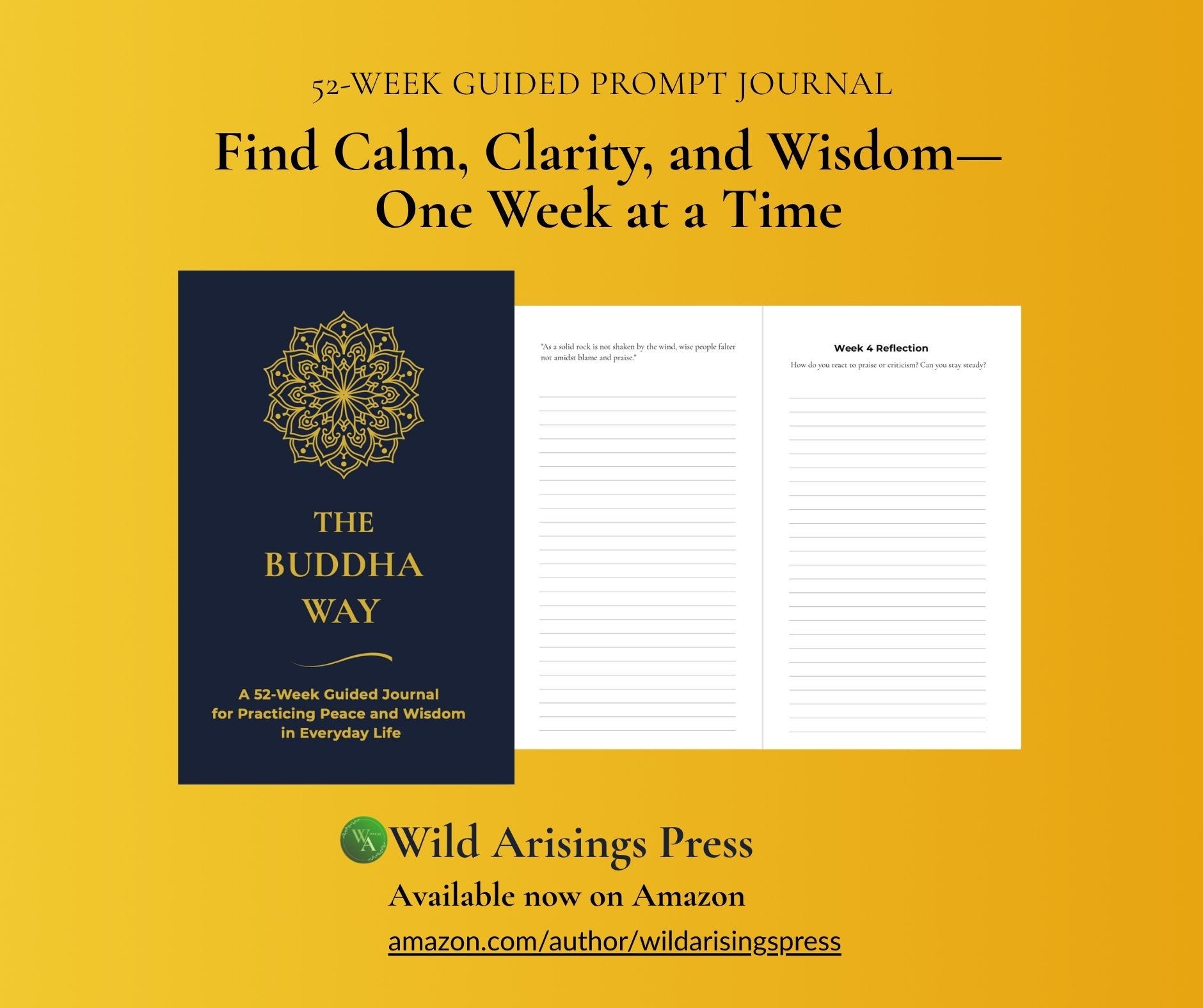
P.S. Want to live with more ease, insight, and open-heartedness? The Buddha Way is my 52-week guided journal that you can start at any time of the year, whenever the impulse to live more mindfully arises. The 52 quotes from the Buddha, along with 52 modern prompts, will inspire you week after week to a more intentional life.
You prompted a memory from when I was maybe ten years old. I had a very strong sense that all of life was a dream - and, when we die, we wake up to reality. That memory resurfaces every now and then, and always brings me a feeling of peace. I love your thinking around specific ways we can incorporate this perspective. 💖
This is such a great reminder, Sandra. I need to revisit this wisdom over and over again. I've always liked the imagery that we are all on stage in a play, acting out different roles for and with each other, and that when it's all over, we get to go backstage and take off our costumes and have a good laugh about what we just played out.