
How to Calm Your Critical Mind
And why you'll feel better if you do


How often do you engage in criticism, judgment, and opinions about others?
Fess up!
I bet it’s often because that’s what we learned growing up, at least most of us.
We live in a competitive culture. So it may seem the norm to find fault with others, discuss their shortcomings behind their backs or even to their face, and believe, with complete conviction, they should change.
Even if you consider yourself a good person, even if you are a good person, unless you train your mind to do otherwise, it probably goes into judgmental mode many times throughout the day.
But does it help you in any way? Have you ever considered how a critical mind might actually harm you?
Break Out of the Criticism Game
Recently, I came across the following pithy advice on criticism from the Buddhist teacher Penor Rinpoche (1932–2009)—relevant for everyone, I feel.
In essence, Penor Rinpoche says to look at your own faults rather than pointing out others'.
That might sound Goody Two-shoes at first take. But, if you know that the mind is the creator of happiness and the creator of suffering, you’ll see that criticism, judgment, and tittle-tattle only keep you in a negative loop and off the joy track.
Let’s take a look at Penor Rinpoche’s advice, first as a whole and then piece by piece.
Penor Rinpoche says:
“It’s very important to keep examining your mind at all times and be aware of what occurs in it. We have this habit of criticizing others; we are very good at pointing out their faults, but we have a hard time being aware of our own flaws. Examining the faults of others will not benefit anyone and only leads to more disturbing emotions, blocking our path to liberation. Whatever anyone else does, let them do it. It’s not your business to find other people’s flaws, and even if you do point them out, there is no way for you to correct them. On the other hand, it is very important to watch your own mind and train in subduing and reducing your own disturbing emotions. Analyze your mind, constantly watch your thoughts, recognizing whether they are positive or negative, and become aware of your faults. If you constantly observe yourself and analyze your thoughts, you will eventually be able to tame your mind. Since we haven’t been able to purify our karmic and emotional obscurations, our gross disturbing emotions can come up anytime, and whenever these emotions come up, we should apply the antidote by looking into our mind and trying to understand that all phenomena are emptiness. If you leave your mind in a relaxed state without contriving anything, disturbing emotions will cease.” — from Ocean of Blessings, Heart Teachings of Drubwang Penor Rinpoche, p.49
Does this advice resonate with you? At first glance, what fits, what feels hard? Does any part feel untrue? Don’t worry about abstract Buddhist concepts like emptiness. Just consider where all that negative thinking in the form of criticism brings you genuine joy.
Criticizing Others Hurts You Too
Now, let’s look at Penor Rinpoche’s advice step-by-step.
He starts by saying:
“It’s very important to keep examining your mind at all times and be aware of what occurs in it.”
Most people don’t pay attention to what goes on in their minds. They just let it roll. They might even believe their thoughts and emotions are out of their control.
Then, they wonder why they’re not happy.
But if you indulge in negative thought patterns or unruly emotions without restraint, happiness will drift further and further away. To find a more lasting sense of peace of mind, you need to be self-aware and commit to working with your thoughts and emotions rather than letting them rule you.
Of course, you won’t be able to be aware of your thoughts and emotions “at all times.” That’s a lofty aspiration. A worthy goal to aim for, but it takes practice to stay in the now, aware of what passes through your mind and heart.
Just do the best you can. Never be hard on yourself when you find yourself lost in thought, miles away. Just bring your mind back to the present moment.
“We have this habit of criticizing others; we are very good at pointing out their faults, but we have a hard time being aware of our own flaws.”
In a sense, if you always focus on others, you’re protected from facing yourself — your flaws, shadow aspects, and unhealthy emotional patterns.
I know, it can be scary to face yourself. But you need to know and work with the painful stuff if you want to heal and grow. If you don’t, it will continue to block you and bring unhappiness.
You can begin by facing your smaller faults. Once you’ve had some success turning them around, move on to bigger ones.
Pay attention to what’s going on in your own mind and heart instead of focusing too much on the faults of others. It will help you grow.
“Examining the faults of others will not benefit anyone and only leads to more disturbing emotions, blocking our path to liberation.”
What kinds of emotions arise when you focus on the faults of others? Do those emotions make you feel good? Think of examples from your own life.
You might feel self-righteous or smug at first. That might feel good momentarily, but those kinds of emotions don’t generally lead to real happiness.
On the other hand, you might feel frustrated or angry. Why doesn’t this person listen to your wise advice?
As Penor Rinpoche points out, examining the faults of others usually stirs up more disturbing emotions. This reinforces your propensity to repeat those same unfulfilling emotional patterns in the future. That’s a basic tenet of Buddhism that’s been supported by neuroscience, particularly its findings on brain neuroplasticity.
On the positive side, due to neuroplasticity, we can turn a tendency to be critical of others around. Doing so will naturally make us happier, too.
“Whatever anyone else does, let them do it. It’s not your business to find other people’s flaws, and even if you do point them out, there is no way for you to correct them.”
That doesn’t mean you should allow people to harm you or anyone else.
Traditional Buddhist teachers can sometimes sound black-and-white. They don’t always understand how Westerners take things literally or how some tend to self-flagellate.
The point is to stop giving away the bulk of your attention and energy to other’s foibles. You need your attention and energy to focus on transforming your own emotional patterns. You can’t correct, fix, or heal anyone else.
Most people don’t want unsolicited advice. If they feel criticized, they tend to retreat rather than grow. If you dish it out often, they may pull away from you permanently. Only give feedback if it’s solicited.
Let people heal themselves in their own way and at their own time.
Be a support, listen, and offer your love. That’s how you can help. But refrain from finding fault and expressing outright criticism.
“On the other hand, it is very important to watch your own mind and train in subduing and reducing your own disturbing emotions. Analyze your mind, constantly watch your thoughts, recognizing whether they are positive or negative, and become aware of your faults. If you constantly observe yourself and analyze your thoughts, you will eventually be able to tame your mind.”
Turn your attention within. Happiness comes from learning to reduce your own disturbing emotions.
That doesn’t mean denying or repressing them. Instead, learn to feel your emotions in your body, with an attitude of self-kindness and a more spacious view. Let them dissolve naturally.
Again, Penor Rinpoche isn’t telling you to indulge your inner critic, become obsessive about your faults, or to get down on yourself. Bring self-compassion, self-kindness, and self-acceptance to any exploration of your own flaws. That way, you’ll grow instead of contracting further into yourself.
If you commit to working with your own mind — with your own thoughts and emotions — you’ll be able to tame your reactions and, over time, fewer disturbing emotions will arise. So, of course, you’ll be happier.
As you find greater emotional freedom, you’ll become a light for others. You’ll positively impact others simply through your way of being.
“Since we haven’t been able to purify our karmic and emotional obscurations, our gross disturbing emotions can come up anytime, and whenever these emotions come up, we should apply the antidote by looking into our mind and trying to understand that all phenomena are emptiness.”
Because we’ve planted and watered the seeds of suffering through repetitive behaviors in the past, we’re prone to repeat the same self-defeating patterns again and again. As a result, our emotional propensities can manifest unexpectedly, at any moment, when a particular trigger appears.
It’s not enough to practice self-awareness for a week or a month. Even if you do well for a while, chances are, when certain causes and conditions come together, you’ll get triggered once again.
You need to make a strong commitment to the practice of mindful self-awareness and engage in it every day.
It might take a lifetime to perfect mindful self-awareness. But don’t let that discourage you.
As soon as you commit to self-awareness, you’ll see positive results. You’ll begin to catch your reactions faster. That naturally feels rewarding. Gradually, you’ll be triggered less and less.
Applying the antidote of emptiness is an advanced practice. I won’t go into it here aside from saying it doesn’t mean “nothingness,” and sharing this Tibetan definition of emptiness that captures the meaning perfectly:
“Free from permanence and non-existence.”
And consider that your ability to change your response pattern proves that it was never permanent. It’s not you. It’s just transitory thoughts and emotions.
Whenever negative emotions arise, remember they’re not the real you.
“If you leave your mind in a relaxed state without contriving anything, disturbing emotions will cease.”
This is the power of mindfulness. Although mindfulness practice is not enough on its own to make disturbing emotions cease, in the long term, it will definitely bring you more inner peace.
Instead of creating one thought after the other, you can learn to relax your mind and allow thoughts and emotions to pass by like trains at a train station. They might stop for a moment, but they won’t linger too long. The trick is to remain aware and relaxed at the same time, without adding more cars to the train.
Decide to Stop Finding Faults In Others Now
I found this advice so powerful, I placed it in a Commonplace notebook as my first entry. A Commonplace book is a way to collect knowledge in one place so it’s easier to remember.
Because I don’t want to forget this quote. I plan to revisit it many times. It’s easy to be inspired by a piece of advice like this, but to change your life for the better, you have to remember it and put it into practice every day.
How do you want to be in a year? Five years? Ten years?
If you just let your mind run wild with criticism, judgments, and opinions about others, you’ll pretty much be the same.
Take this moment now to decide to stop criticizing others and work with your own mind and heart instead, making it more beautiful day by day.
Until Next Time
I would like to tell you that slowing down has miraculously healed me. But another medical glitch has absorbed my time and attention in January and so far in February. More on that next time.
Still, slowing down has been so beneficial in many ways. I’m so glad I gently applied the brakes and deeply appreciate your encouragement.
As always, I’m so grateful for your presence and support. Every ❤️, comment, and share helps my articles reach more people. So please keep them coming, and know how blessed I feel by your presence and generosity.
Until next time, stay safe, be happy, and be kind to yourself. Sending you all my love and best wishes.
xo Sandra
If this piece resonated, you’re warmly invited to subscribe.
Join 4,000+ beautiful souls and receive thoughtful reflections and gentle guidance on calming your mind, healing your heart, and trusting your inner wisdom—twice a month.
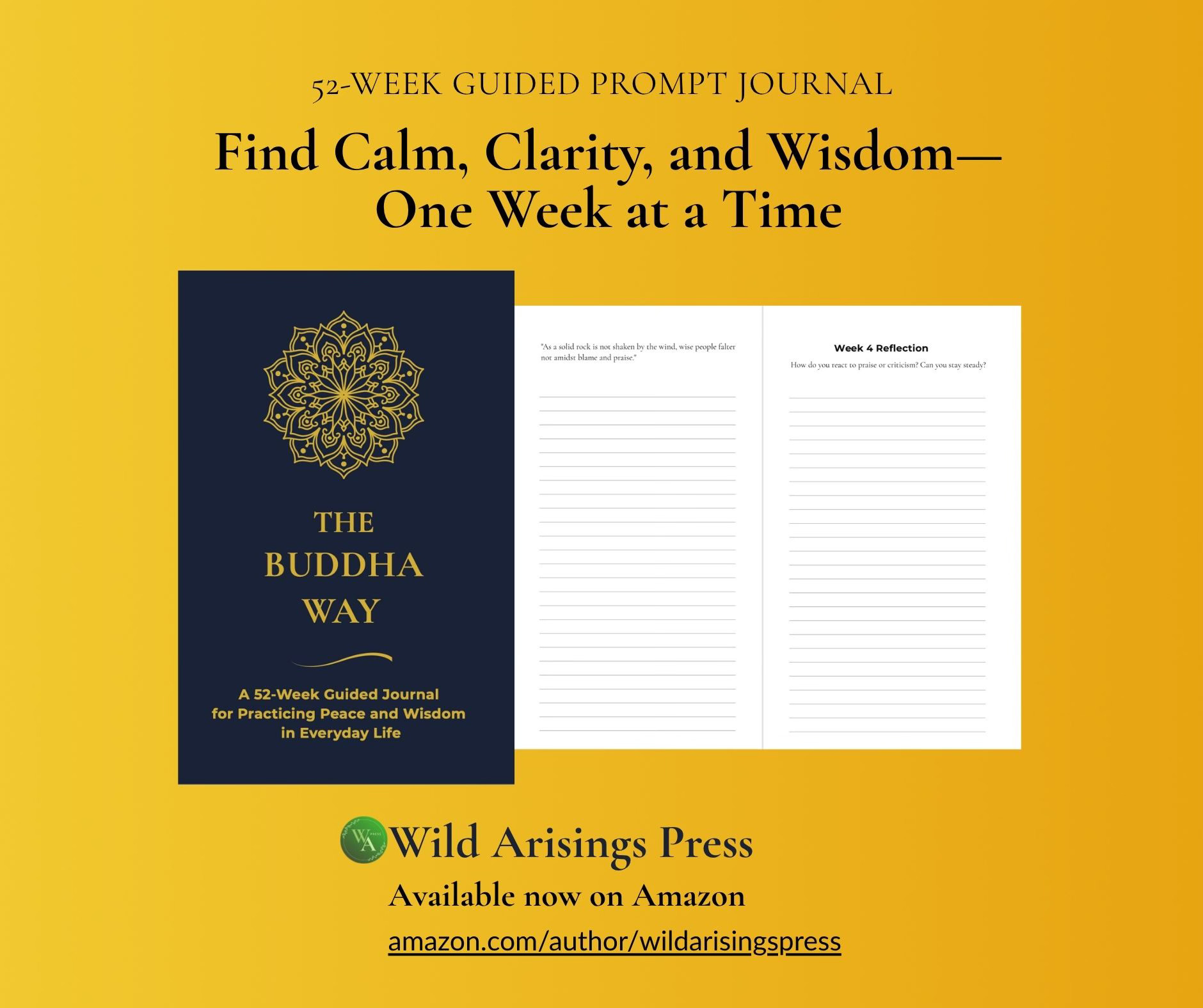
P.S. Many people think January is the moment to begin. But often, it's in February that we’re finally honest about what we need. The Buddha Way is a 52-week guided journal you can start whenever the impulse to live more mindfully arises.
You have offered fantastic suggestions, Sandra! I strongly believe everything you wrote to be true.
My personal struggle is not in judging others, though I am sure slip into that mode now and again. Instead, I too often sit in judgment of myself. I work with those thoughts to release them, but some prove more persistent than others. I'm getting better.
I grew up in a family in which judgment was a default mode of interaction. They judged and derided just about everyone - whether they knew them or not. I came to the understanding ages ago that diminishing others made them feel better about themselves. Of course, they never felt better about themselves. I loved your comment that people judge others so that they do not have to face themselves - shadow and all. It was something that never occurred to me and it was illuminating. I hadn't looked at it as a protection to hide behind. Thank you!
Sandra, this really made me pause and notice how quickly my mind drifts into critique instead of curiosity. Turning that attention inward feels harder, but also far more freeing in the long run.